
Introduction
“Doctor, it feels like my body has forgotten how to feel.”
She told me this with watery eyes, holding her teacup with both hands — as if holding her own fragility.“I don’t feel pain… but I don’t feel desire either. Just silence.”
Vaginal dryness after menopause is not only a physical condition. It is also a silence — one that settles between the thighs, in relationships, in glances, and in the way a woman inhabits her own body. Many women live with this discomfort quietly, believing it is “normal for their age.” That nothing can be done. Or worse: that pleasure is gone forever.
But it isn’t.
What happens in menopause is a natural hormonal shift: estrogen levels drop, blood flow decreases, and the vaginal tissues become thinner, drier, and more sensitive. The natural acidity (pH) changes, and the body’s own lubrication slows down. These changes can cause burning, itching, discomfort during daily activities — and especially during intimate moments.
But beyond biology, there is something deeper: the feeling that the body no longer responds. That pleasure has become a memory. That touch has been reduced to absence.
If you feel this way, know this:
you are not broken, and you are not alone.
In this article, I want to share with you 5 natural solutions that truly help restore comfort, sensitivity, and — above all — reconnection with your body. We will talk about food, movement, natural products, and small rituals that awaken not only your skin, but also your emotional memory.
And before we begin, let me tell you one truth:
Your body hasn’t given up on you.
It is simply waiting for you to touch it with care again.
The Power of Botanical Oils
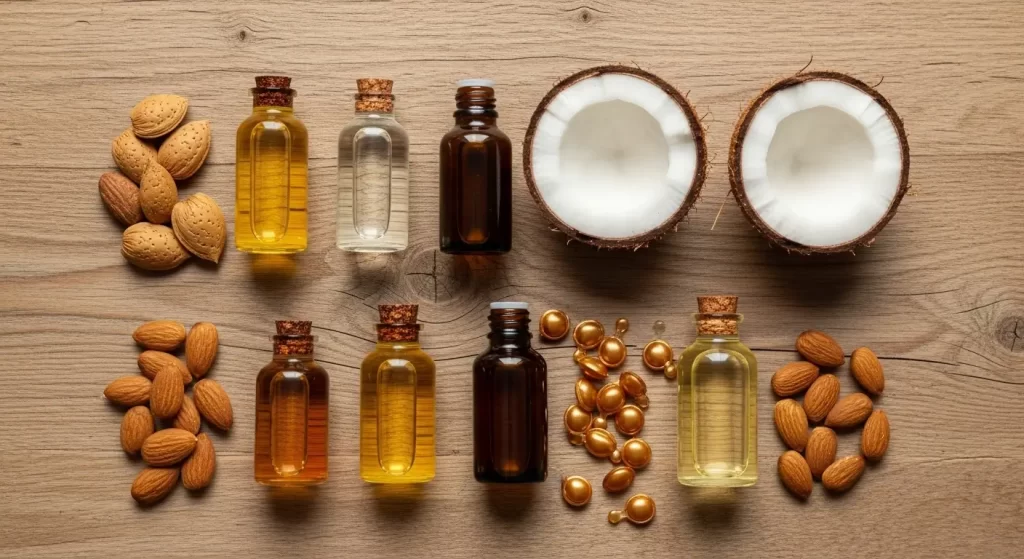
“I started with almond oil. At first, I only applied it on the outside, shyly. Later, I slowed down, touched myself with more presence… and for the first time in years, I felt something awaken.”
When women hear about vaginal dryness after menopause, many immediately think of artificial solutions, disconnected from the reality of a mature body. Yet there is a quiet beauty in nature’s remedies — especially when they are used as an act of care, not just correction.
What happens to intimate skin after menopause?
As estrogen levels drop, the skin of the vulva and vaginal entrance loses elasticity, hydration, and blood supply. It becomes thinner, more fragile, and sometimes reactive to conventional products.
The natural protective layer — once soft, plump, and well-lubricated — changes. The pH rises, the protective flora weakens, and dryness appears. This can cause itching, burning, discomfort with touch, and even small tears.
Why botanical oils can help
Botanical oils do not replace natural lubrication, but they provide something equally valuable: protection, nourishment, and reconnection.
They create a soft layer over the skin that reduces friction, soothes irritation, and restores comfort.
And when used slowly, with intention, they can become a ritual of self-touch — a way to tell your body: “I’m here, and you still matter.”
Recommended oils
- Apricot kernel oil (cold-pressed): rich in fatty acids and vitamins A + E, it regenerates delicate skin.
- Fractionated coconut oil: light, deeply penetrating, with mild antimicrobial action.
- Vitamin E oil: a powerful antioxidant that improves elasticity and soothes burning sensations.
These oils are hormone-free, fragrance-free, and non-aggressive. But they must be pure, high-quality, and applied with presence. Think of them not as lubricants for intercourse, but as nourishing balms for daily care.
“Imagine them as water poured onto a soil that has been waiting too long for rain.”
How to use them
- After a shower, with clean hands, apply a few drops to the vulva and gently massage the area.
- Do it slowly, breathing deeply — not as a task, but as a ritual.
- Don’t rinse. Allow the oil to absorb while you rest, read, or simply be still.
The gesture matters more than the product itself.
But it’s also true: for many women, oils are not enough.
They soothe — yes. But sometimes what’s needed is stimulation, warmth, and circulation that reawaken desire.
And that is exactly where we are headed next.
Foods That Restore Hydration From Within
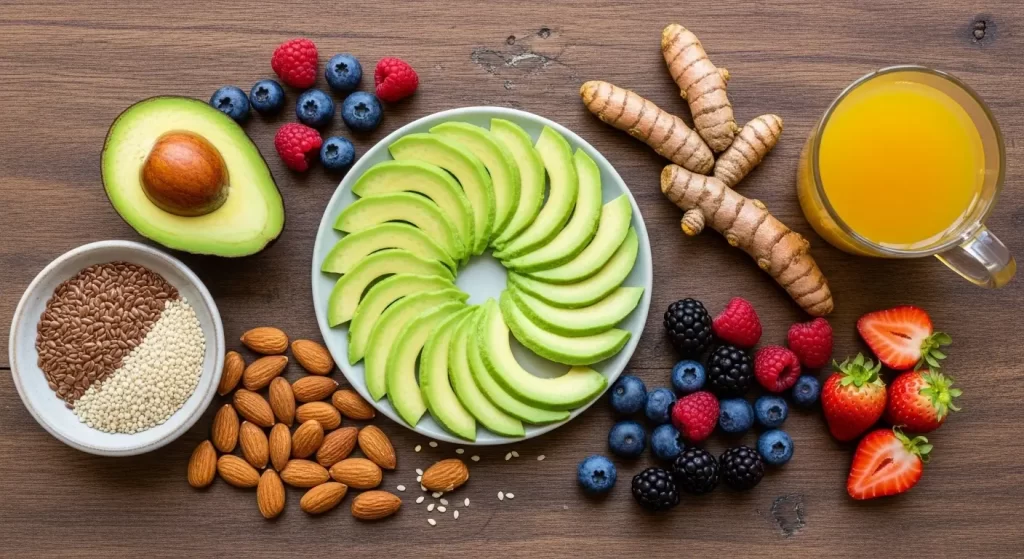
“Doctor, I drink water… but it feels like my body doesn’t absorb it. My skin is dry, my eyes burn — and down there, everything feels shrunken.”
This complaint is more common than you think — and it goes beyond just vaginal dryness after menopause. Many women feel as if the moisture in their whole body has disappeared, as if dryness were an inevitable part of aging.
But the truth is: there are natural ways to hydrate the body from within and support the mucous membranes that keep intimate tissues supple.
This isn’t just about drinking water (though that’s important). It’s about feeding your body with the right nutrients — the building blocks that allow it to rebuild its inner landscape.
Key foods for intimate hydration
Golden flaxseeds (freshly ground)
Rich in lignans (plant compounds with mild estrogen-like activity), omega-3, and fiber. They help balance hormones naturally and support mucosal hydration.
Simple ritual: Grind 1 tablespoon of flaxseeds each morning and add to yogurt, smoothies, or fruit. Fresh grinding is key — it releases the active compounds.
Avocado
Full of healthy fats and vitamin E, avocado nourishes cell membranes and nervous system balance — both crucial for pleasure and tissue health.
A slice of avocado in the afternoon can do more than satisfy hunger. It can change your energy.
Sesame seeds and nutsTiny, but powerful
They support hormone production and provide minerals essential for tissue repair.
Try a mix of lightly toasted sesame, pumpkin seeds, and almonds as a daily snack.
Turmeric (curcumin)
A natural anti-inflammatory that improves circulation and supports tissue regeneration.
A warm evening tea with turmeric and ginger doesn’t just soothe your hands — it nourishes your pelvic blood flow too.
A memory I carry
One of my patients, Lucia, swore her body “woke up” on the mornings she prepared her seed milk. She blended warm water with flaxseeds, sesame, and a touch of turmeric.
She would sip it in silence and tell me later:
“Doctor, it feels like even my skin breathes differently on those days.”
Why food matters
In menopause, nutrition isn’t vanity — it’s hormonal self-care.
It’s a daily way of telling your body:
“I care about you. And I want you to keep feeling.”
Next, we’ll explore another crucial key: movement and circulation — because pleasure also depends on blood flow, oxygen, and the body’s rhythm.
Movement and Circulation: Awakening the Body’s Flow

“I stayed still for so long… it felt like even my hips had forgotten how to sway.”
Many women tell me they’ve “lost desire.” But more often than not, what they’ve lost is movement.
Desire, pleasure, and sensitivity all rely on something very tangible: blood flow.
Without circulation, there is no arousal. Without oxygen, skin doesn’t respond. And when menopause is accompanied by long periods of inactivity, the body slips into a silent dormancy.
Why circulation matters for vaginal dryness after menopause
Lubrication is not only about hormones. It also depends on a fine network of blood vessels nourishing the pelvic tissues. When these vessels are under-stimulated, blood flow decreases — and with it, lubrication, elasticity, and sensitivity.
“It’s not that your body stopped feeling. It’s that the blood stopped reaching those places.”
Three movements to reawaken your center
Conscious walking (20 minutes a day)
Walking oxygenates the brain, reduces cortisol, and improves pelvic circulation. More than exercise, it’s a ritual of rhythm.
Try walking alone, listening to soft music, or simply feeling the breeze on your skin.
Hip-opening stretches
Simple poses like the butterfly stretch (sitting with the soles of your feet together) gently release tension in the pelvic floor and restore awareness of your core.
A 5-minute stretch each morning can reconnect you with the energy at your center.
Free dancing — even without rhythm
You don’t need to be a dancer. Just let your hips move. Choose a song that stirs your emotions and allow your body to sway.
Movement is memory. It reminds your body of its flow.
“When she let her hips move again, she felt something inside her begin to move too.”
Pleasure begins with movement
Before any supplement, oil, or gel, ask yourself:
Does my body still have space for flow? For warmth? For sway?
Because circulation is not just about health. It is the first step toward desire.
Probiotics and the Intimate Ecosystem: Restoring the Ground Where Touch Can Flourish
“Doctor, I can’t explain it… everything feels drier, more sensitive, and sometimes it even smells different.”
So many women sense that something has changed “down there” but can’t quite name it. Alongside vaginal dryness after menopause, they notice discomfort, irritation, or simply the absence of the freshness they once took for granted.
Often, what has shifted is the vaginal ecosystem. And when the soil changes, the flowers struggle to grow.
What happens to the vaginal flora in menopause?
Estrogen plays a vital role in maintaining a balanced vaginal environment. When levels fall, so does the population of protective lactobacilli — the “good bacteria” that keep harmful microbes in check.
At the same time, vaginal pH rises, making the environment less acidic and more vulnerable. The result? Increased dryness, burning, irritation, recurrent infections, and even small cracks in the tissue.
“It’s like a garden that lost its fertile soil. The flowers didn’t disappear by choice — they just couldn’t thrive anymore.”
How to restore balance
Targeted probiotics for women
Not all probiotics are the same. Specific strains like Lactobacillus reuteri and Lactobacillus rhamnosus have been shown to support vaginal health by lowering pH, restoring flora, and improving natural moisture.
A supplement like PH Defend Women’s Probiotic is designed especially for the female body — not to change hormones, but to rebuild the intimate ground where comfort begins.
With consistent use (around 8 weeks), many women notice fewer infections, fresher sensations, and improved lubrication.
Prebiotic-rich foods
Foods high in fiber — fruits, vegetables, seeds — nourish the good bacteria in both the gut and vagina. And since the gut and vagina communicate more than most people realize, a healthy diet directly supports intimate balance.
Why this invisible care matters
Rebalancing your flora doesn’t feel glamorous. But it is powerful.
Because when the environment is safe and nurtured, the body relaxes, opens, and responds more freely.
And once that foundation is restored, the stage is set for something many women secretly long for: a reawakening of pleasure itself.
Sensory Awakening: When the Body Remembers How to Respond
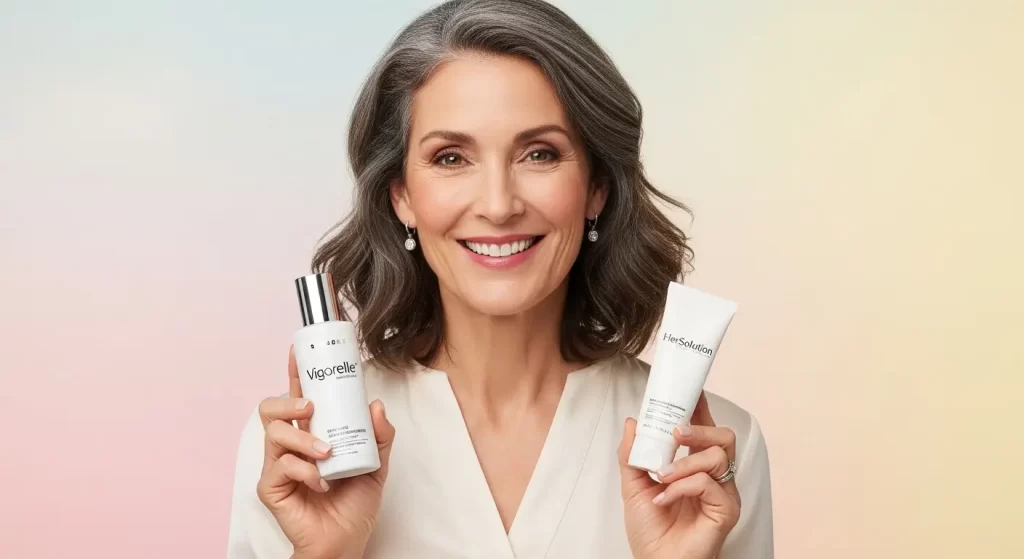
“Doctor, I touched myself… and for the first time in years, I felt a wave of warmth rise from my belly. It was like meeting a part of myself I thought was gone.”
Vaginal dryness after menopause isn’t only about lack of lubrication.
It’s about absence of response. The touch that once sparked shivers now feels muted. The body, once quick to answer, now falls silent.
But here’s the truth: pleasure never disappears.
It may rest, it may quiet down, but it always waits for the right invitation to return.
When gesture meets science: natural arousal gels
Botanical oils can soothe dryness, yes. But many women need something more: a deeper stimulus that awakens circulation, heat, and sensitivity.
This is where natural arousal gels like Vigorelle and HerSolution Gel
come in.
They don’t just hydrate — they reignite.
Vigorelle: the cool touch that ignites heat
Picture this: you apply a small amount, and at first, there’s a gentle coolness — like a breeze brushing your skin. Then, slowly, that coolness transforms into a pulsating warmth that stirs blood flow, color, and sensitivity.
Its formula blends:
- Damiana: a traditional botanical long associated with women’s desire.
- Peppermint: awakens nerve endings with a refreshing tingle.
- Grape seed oil: nourishes and softens delicate skin.
One woman told me:
“It felt like a cool wind had lit a fire inside me.”
This contrast — first cool, then warm — is what makes Vigorelle so unique. It doesn’t just soothe dryness; it invites your body to remember how to respond.

HerSolution Gel: velvet touch with a warming embrace
While Vigorelle excites through contrast, HerSolution Gel seduces with softness. Its texture is smooth, velvety, almost like a nourishing cream.
At first, it hydrates deeply, relieving the fragile feeling of dryness. But within minutes, the magic begins: arginine (an amino acid that boosts circulation) increases blood flow, while aloe vera calms, and shea butter leaves a silky finish.
The effect is gradual — from soothing comfort to a spreading warmth, like being wrapped in a tender embrace from the inside out.
One of my patients once whispered:
“Doctor, I didn’t expect my body could still respond like that.”
Why these gels feel different
- They stimulate circulation, bringing warmth and color back to the tissues.
- They awaken nerve endings, enhancing sensitivity and touch response.
- They nourish the skin, creating softness and comfort instead of irritation.
- They do all this without hormones or artificial fragrances.
But perhaps the most important difference is this:
These gels don’t work by force.
They work by invitation.
They turn a simple gesture into a ritual of reconnection — a way of saying to your body:
“You still belong to pleasure. And it still belongs to you.”

Conclusion: Silence Is Not the End
“It wasn’t your body that gave up. It was the care for it that got left behind.”
Vaginal dryness after menopause is not just a physical issue.
It touches self-esteem, relationships, and the way a woman sees herself in the mirror. But what I want you to remember is simple: there are natural, real, and possible ways to restore comfort and even pleasure.
Let’s recap the 5 solutions:
- Botanical oils — to nourish, protect, and soften intimate skin.
- Functional foods — flaxseeds, avocado, sesame, turmeric… hydration from the inside out.
- Movement and circulation — walking, stretching, dancing; because pleasure needs blood flow.
- Women’s probiotics — to rebalance the intimate ecosystem and bring freshness back.
- Natural arousal gels — Vigorelle and HerSolution Gel, to awaken sensation and invite the body back into response.
Many women believe that this chapter of life has closed forever. That desire has left. That the body no longer knows how to feel.
But here is the truth:
Pleasure never left. It simply moved — and with the right gestures, it can be called back.
If you felt curious about the gels I mentioned, know this: each offers a unique experience. The cool-to-warm spark of Vigorelle, or the velvet-soft embrace of HerSolution Gel . The choice is personal. The important part is to give yourself permission to explore.
A question for you to hold:
Do you still listen when your body asks for tenderness — or have you silenced that call?
If this touched you, you may also want to read:
➡️ “Why Women Avoid Touch After 50 — And How to Reconnect With Simple Steps“
And remember:
A well-cared-for woman is not vain.
She is unforgettable — inside and out.
